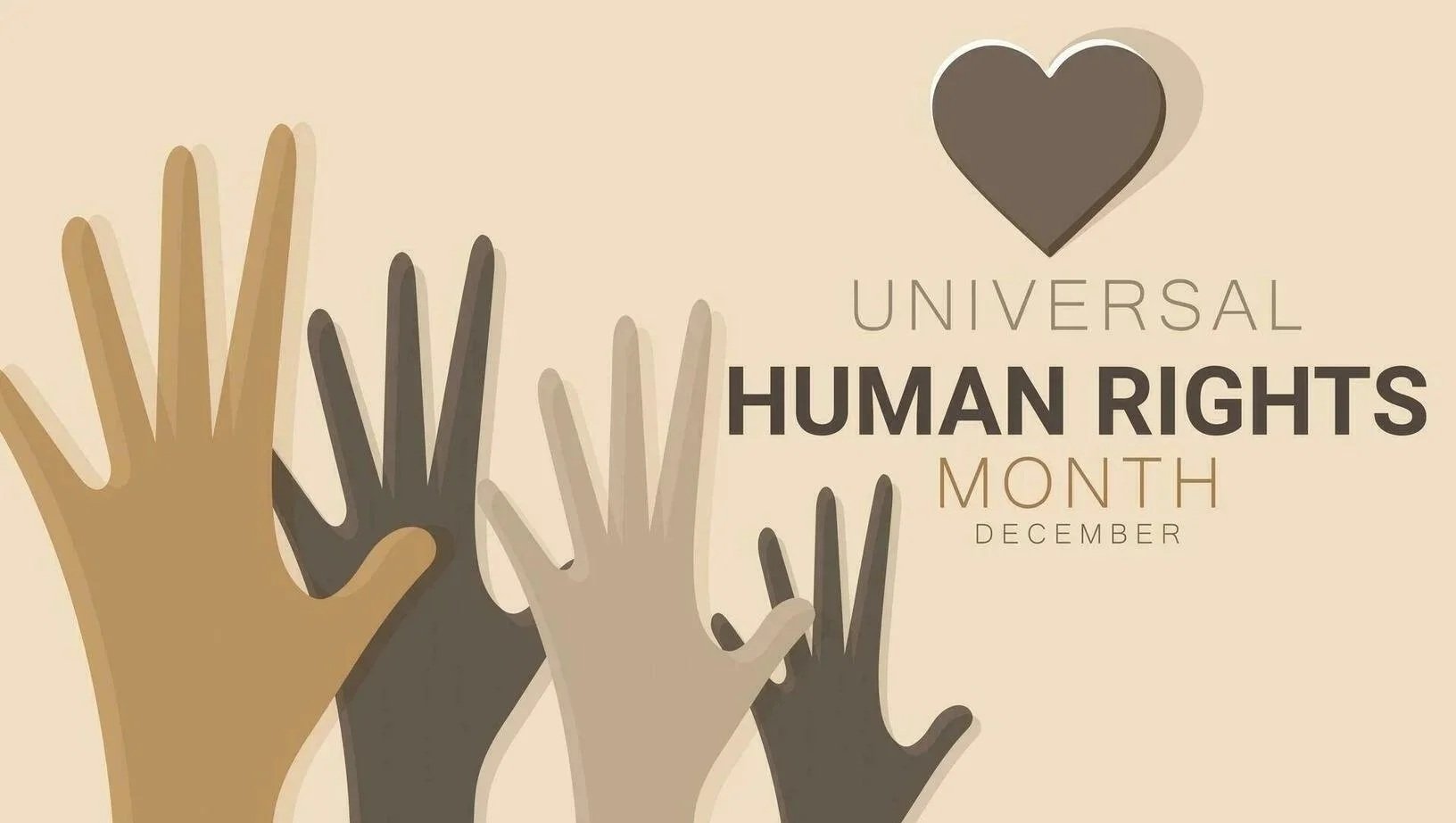
Honoring Universal Human Rights Month:
Why Protecting the Rights of the Black Community Strengthens the Foundation of Human Rights Everywhere
Every December, we observe Universal Human Rights Month, a time to reflect on the inherent dignity, equality, and freedoms that belong to every human being. This month serves as a global reminder that human rights are not abstract principles; they are lived experiences shaped by history, culture, and community. Nowhere is this more evident than in the story of the Black community, whose struggles, triumphs, and ongoing fight for justice have helped define the very blueprint of human rights advocacy in the United States and around the world.
The Black Community as the Blueprint for Human Rights Movements
The pursuit of human rights is inseparable from the pursuit of Black freedom. From the earliest abolitionist movements to the civil rights era and today’s demands for equity, the Black community has repeatedly forced the world to confront the difference between professed values and lived realities.
Movements led by Black people—whether in America, the Caribbean, Africa, or across the diaspora- have consistently pushed global conversations about justice forward. These movements taught the world that:
Freedom is incomplete when denied to even one group.
Human rights require accountability, not silence.
Equity demands dismantling the systems that normalize inequality.
In this way, the rights of the Black community have never been only about one community. They have illuminated universal truths about justice, fairness, and humanity that apply to all people.
Acknowledging the Past to Build a Better Future
Human Rights Month also challenges us to look honestly at history. Acknowledgment is not about guilt or blame; it’s about truth. It is about understanding how past injustices have created present disparities, and how confronting that reality is the first step toward meaningful change.
For the Black community, acknowledging the past means honoring the ancestors who endured enslavement, Jim Crow, segregation, displacement, and systemic oppression. It means recognizing how those histories still show up today in education, healthcare, housing, employment, and the criminal justice system.
But acknowledgment also means celebrating resilience: the innovators, artists, scholars, storytellers, activists, and everyday people who challenged injustice at every turn. Their work carved the path toward equality and laid the foundation for today’s human rights framework.
When we face the past with honesty, we create the conditions for healing, transformation, and unity. Only then can we shape a future rooted in dignity and opportunity for all.
Universal Human Rights Depend on Collective Liberation
Human rights cannot be selective. They are universal, or they are not human rights at all. When the rights of Black people are protected, uplifted, and defended, society becomes more just and humane for every individual. History has shown this time and time again:
Anti-lynching campaigns expanded the national understanding of justice.
Voting rights movements strengthened democracy for all Americans.
The push for fair housing opened doors for families of every background.
The fight for equitable healthcare helped redefine what dignity in care looks like.
The liberation of one group strengthens freedom for all. When society protects its most vulnerable, it expands justice everywhere.
Moving Forward: The Work Ahead
Universal Human Rights Month is a call to recommit ourselves to equity, not as a symbolic gesture, but as a daily practice. It invites all people to reflect on how they show up in their families, communities, workplaces, and institutions. It challenges us to ask:
How do we honor the histories that shaped us?
How do we hold systems accountable?
How do we build bridges across cultures and generations?
How do we ensure the next generation inherits a world freer than the one we received?
Protecting the rights of the Black community is not an isolated mission. It is an essential pillar of universal human rights. It is how we move from acknowledgment to action. From struggle to progress. From division to unity.
A Future Rooted in Truth and Justice
As we recognize Universal Human Rights Month, let us remember that honoring human rights begins with honoring humanity itself. And humanity requires us to stand with those whose voices have too often been silenced. To uplift Black stories, protect Black lives, and affirm that equality is a right, it is not optional.
When we confront the past with courage and build the future with intention, we create a world where universal human rights are not just proclaimed but lived.
A world where dignity is non-negotiable. A world where justice is shared. A world where everyone, regardless of race, identity, or origin, can thrive.